San Antonio Addiction Treatment: Family Education And Learning Workshops That Help
Families do not trigger addiction, and they can not heal it. However a family members can become the most regular, maintaining pressure around a person that is struggling, and the distinction in between disorder and consistent progress usually comes down to education and technique. In San Antonio, family education workshops linked to addiction treatment deal both. They demystify what is taking place in the brain, they teach concrete communication skills, and they connect family members with regional sources that maintain everyone more secure and even more resilient.
I have sat in spaces on the North Side and the South Side where grandparents, army partners, and adult kids shared one thing in common: they desired a plan. Not a lecture, a plan. One of the most valuable workshops provide that, piece by piece, without pity or faster ways. This post discusses what strong programs in San Antonio resemble, what households can expect to discover, and exactly how to choose a workshop that in fact moves the needle.
What a family workshop actually is, and what it is not
Family education in addiction treatment is a collection of structured courses and led discussions that run along with a liked one's care. Some programs meet when a week in the evening for eight to ten weeks, others condense the content right into a weekend break intensive, and lots of currently blend in telehealth sessions for out of town relatives. The goal is not to turn you into a medical professional. The aim is to help you comprehend the pressures at play, decrease unhelpful patterns in the house, and provide you repeatable tools for support.
A good facilitator will set ground rules, shield discretion, and maintain the focus on what households can control. That means you will hear the expression you can only change your side of the street. It can be disconcerting initially. Lots of people arrive wanting to learn exactly how to obtain their loved one to stop. The workshop will certainly invest more time on how to minimize the friction, reward much healthier habits, and hold a border without screaming or silent treatment. That change, from control to influence, is the point.
Good household programs are not viewer sports. They are not slideshow marathons. They ask you to exercise brand-new language out loud, to create a brief limit declaration, and to dedicate to a little adjustment in between sessions. And if a workshop is mainly a pile of handouts with little technique or comments, maintain looking.
The core subjects that really transform outcomes
Every program arranges its curriculum in a different way, yet the best ones in San Antonio dependably cover a core collection of abilities and facts.
First, the science . Anticipate to find out just how substances pirate benefit pathways, why resistance and withdrawal make self-control an unreasonable measure, and what early recuperation does to rest, emotions, and interest. When a father recognizes that his little girl's sprints of impatience become part of dopamine normalization and not a personal attack, arguments hand over quickly. Details similar to this does not excuse painful actions, it frames it so you can react effectively.
Second, sensible interaction. Family members discover to stay clear of cross exam and why long lectures rarely stick. They practice making use of short, specific declarations tied to visible habits. They discover what favorable support resembles for adults, not youngsters. A sibling that drops the all or nothing strategy and starts strengthening tiny wins, like three days of showing up to outpatient teams, typically sees more interaction. The workshop will certainly educate versions of the CRAFT strategy, which uses favorable reinforcement, prepared demands, and great timing as opposed to confrontation.
Third, borders and safety and security. Benchmarked boundaries are concrete and enforceable, like not maintaining money at home or locking up automobile keys after 10 pm. A workshop should show how to set a boundary, claim it when, and follow up without escalating. This is where many families recognize they have been making threats they can not apply. Switching to easier limits that you control takes the heat out of the room and secures relationships.
Fourth, regression danger and situation planning. Individuals settle on warning signs, like disappearing for hours after cash advances or missing treatment two sessions straight. They practice what to do when a warning sign turns up, including who to call, where to go, and that keeps the insurance card. A dilemma is not the moment to design a plan. You construct it in class so you can act faster later.
Fifth, medicines and co happening problems. In San Antonio, lots of programs include education and learning on medications for opioid, alcohol, and nicotine utilize conditions, together with antidepressants and mood stabilizers that may be component of a more comprehensive treatment plan. Households hear what these medications do and do refrain, the expected side effects, and the threats of quiting instantly. They additionally learn to expect anxiety, stress and anxiety, trauma symptoms, and ADHD qualities that often sit under the surface and make complex recovery.
Sixth, systems and logistics. Workshops that serve the city well discuss insurance policy truths in Texas, transport to facilities on bus lines, and what documents employers legitimately can and can not request in a leave of absence. They also use neighborhood source maps, from peer recovery teams to faith based supports to affordable counseling for family members members.
When programs cover these areas with instances and duty plays, we see measurable changes. Retention in treatment improves when families know how to motivate attendance and what to do when inspiration dips. People re enter care quicker after slips due to the fact that the family currently has a re access strategy. Those are not magic tricks, simply the cumulative effect of doing little things on purpose.
A week inside a San Antonio workshop
Here is what a regular week resembles for family members going to a program that runs together with addiction treatment in San Antonio.
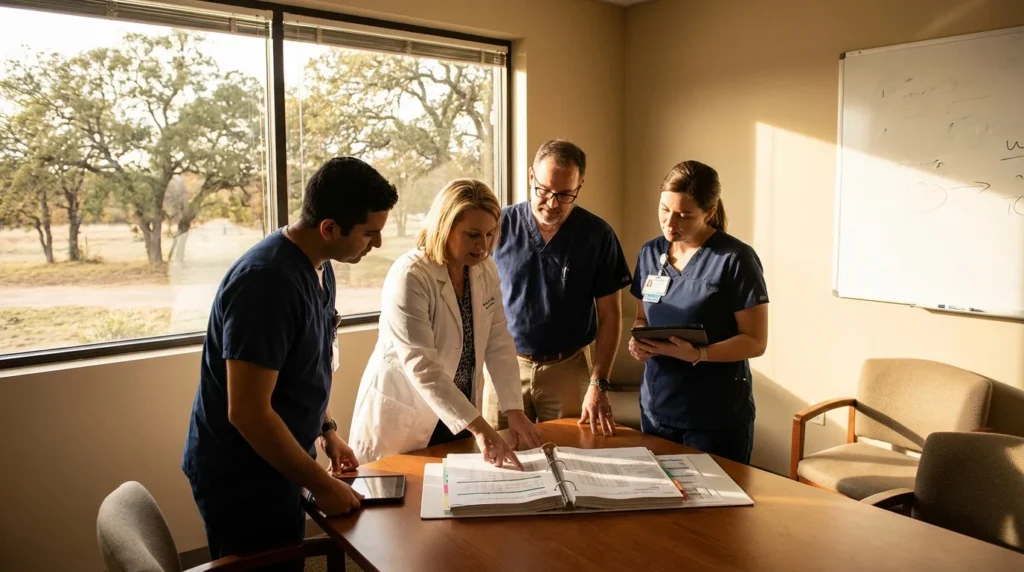
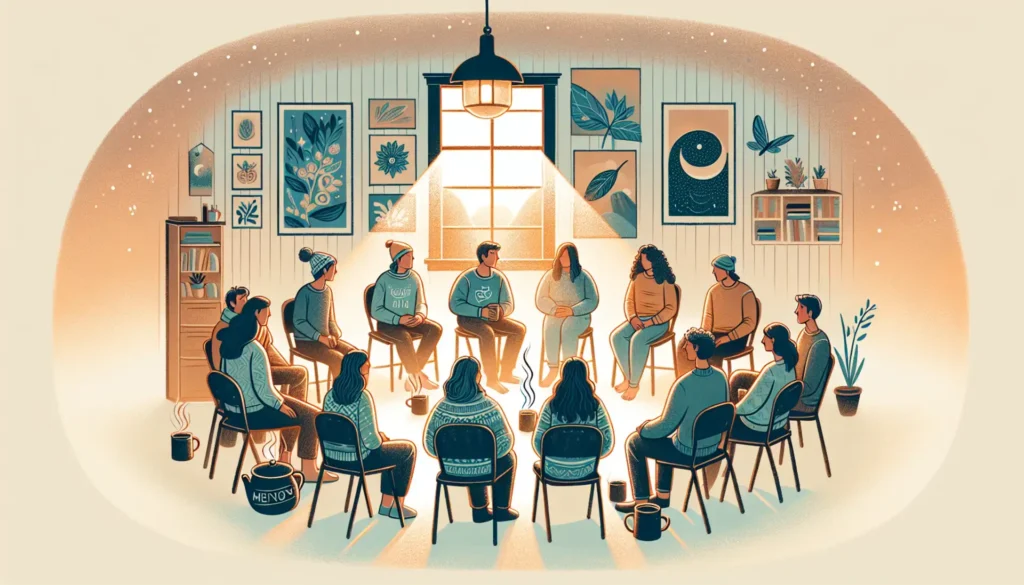
On Tuesday evening, a blended team collects in a classroom near the clinical center. A Navy professional's partner rests next to a Tía who drove in southern Side. A bilingual facilitator opens up with a fast evaluation and sign in on last week's method assignment. One couple noticed they were suggesting less once they switched over to shorter, valid statements. An additional moms and dad admits they tried to establish 3 brand-new regulations at the same time and it backfired. The class revamps those right into one limit the parent can impose today.
Midway through, the facilitator educates a brief sector on desires and hints, then relocates directly right into method. Families pair up to practice a request for a loved one to participate in a Saturday assistance meeting, with focus to timing and tone. Someone laughs, somebody destroy. People leave with one specific activity for the week, plus a handout in English and Spanish.
On Saturday early morning, a different place runs a two hour session on regression prevention. A case supervisor from the program's outpatient facility signs up with to describe how to fast lane re analysis after a gap. Family members save the straight number and learn the distinction between an administrative discharge and a therapeutic action down. Time is set aside to fill out a dilemma strategy worksheet. Not theory, logistics.
Even where the schedule bends, strong programs equilibrium education and learning with practice session and leave households with a small, doable assignment.
What aids versus what inadvertently harms
In workshops throughout the city, one of the very first tasks is mapping what relative are doing currently and sorting the valuable from the dangerous, without judgment. Allowing is not a personality problem. It is a determined attempt to keep somebody safe in the short term. The issue is that short-term solutions can disrupt long-term change.
A granny who pays duplicated penalties and changes busted phones typically thinks she is preventing worse end results. And often she is. Yet if those rescues are automatic, they get rid of natural comments. In course, we help her make a decision when to go back and when to step in. An experience to therapy is support. Changing a phone smashed during a binge is commonly allowing. The line is not always clear, so the workshop offers her a choice device: ask whether the action makes continued use much easier or makes recovery actions simpler. If the response is the former, try to find an option that preserves security without smoothing the path to even more use.
Families likewise learn not to error silence for peace. Preventing the topic totally breeds resentment and uncertainty. On the various other hand, a daily interrogation rarely inspires. The workshop assists family members find a constant tempo, like a regular sign in on exactly how therapy is going and what support the person in fact desires today. Foreseeable, brief, respectful.
Myths the workshop will dismantle
Common misconceptions appear everywhere. One is that challenging love suggests reducing somebody off entirely. Occasionally separation is needed for safety, yet a lot of the time hard love suggests clear, constant boundaries with warm link. One more is that treatment only functions if the person hits base. In San Antonio, medical professionals see better end results when people go into care prior to disastrous losses, commonly nudged by member of the family who enhanced small enhancements and motivated next steps.
Another myth is that medications change one addiction with one more. Medications for opioid or alcohol make use of condition do not provide a high when taken as suggested. They decrease desires and shield versus overdose or regression. The workshop will offer you language to respond to apprehension from relatives or church close friends that stress drug signals weakness. It does not. It signals a medical condition took care of with medical tools.
Finally, people worry that discussing relapse invites it. Data and experience state otherwise. Calling triggers and constructing a plan minimize shame and speed re interaction with treatment. Silence, by contrast, makes a slip most likely to spiral.
The neighborhood fit: why San Antonio context matters
San Antonio's mix of societies, languages, and professions shapes what households require from education. A program that flourishes below takes note of those textures.
Many homes include active service service members, reservists, or experts. That indicates the workshop should explain TRICARE reference patterns, privacy restrictions in command routed therapy, and what a warm handoff from property like a VA center looks like. Military families also take advantage of skill structure around reintegration after deployments, because shifts in routine can spike tension for every person involved.
Hispanic and Latino families often bring solid intergenerational ties and belief methods to the table. A culturally aware workshop invites those assistances. It provides bilingual products, invites a family member to translate jargon in team if needed, and respects the duty of priests or ordinary leaders. At the exact same time, the facilitator should help families navigate when social expectations around respect and privacy get in the way of truthful discuss usage and mental health. This is not about transforming values, it has to do with aligning them with healing tasks.
Transportation issues. If the only family sessions happen across community throughout heavy traffic, attendance decreases. Good San Antonio programs schedule at least one evening session on a bus line, and some offer digital choices for family members in the Eagle Ford or out of state. Childcare is not usual but a handful of providers companion with recreation center to make it feasible. Ask about it.
Paying for household education and learning in Texas
Insurance coverage for family members education connected to addiction treatment differs. Numerous commercial strategies in Texas include family members programming when it belongs to a covered episode of care. TRICARE commonly authorizes household services during specific levels of care, especially extensive outpatient or domestic. Some state moneyed companies sustained by Texas Health and wellness and Person Providers Payment run open family education and learning evenings at no charge, though offerings change year to year and room can be limited.
If your liked one is not in formal therapy, you still have alternatives. Numerous facilities in San Antonio permit household registration in education and learning series also when the recognized patient is not yet in care. Charges range commonly, so inquire about moving ranges, scholarships, and whether participation counts as component of your liked one's treatment objectives, which might influence insurance.
For payment, be prepared to listen to the hodgepodge of CPT codes and diagnoses. It is great to ask the company to describe what is billable and what is not. You can likewise request that your involvement be kept in mind in your liked one's therapy plan. That documents sometimes aids with protection or work environment leave.
How to select a workshop that works
Here is a fast list to aid you evaluate programs prior to you commit.
- Ask what the educational program covers and how much time is spent practicing interaction, boundaries, and dilemma preparation, not just lecture.
- Confirm whether the program supplies bilingual sessions or materials and if they invite prolonged family.
- Find out what takes place after the workshop finishes, including alumni teams, references to household therapy, and links to shared aid like Al Anon or SMART Family Members and Friends.
- Clarify presence choices for out of town loved ones, consisting of video clip access and whether those participants can speak during groups.
- Request names and qualifications of facilitators, and how they educate personnel in approaches like CRAFT or motivational interviewing.
If a program can not address those inquiries plainly, keep looking. Solid centers will walk you through just how they sustain families step by step.
The initially session: what it feels like
People usually turn up to the opening night with crossed arms and limited jaws. They are tired of being blamed or disregarded. An experienced facilitator starts by normalizing that stress. You might be asked to present yourself by given name and connection, absolutely nothing more. The guidelines of the area will certainly be straightforward: keep tales confidential, speak for yourself, and prevent guidance giving unless someone requests it.
There will likely be a brief review of substance use conditions that stays clear of moralizing. After that comes a brief workout, like rewriting a typical battle into a clear boundary and a particular request. As an example, rather than you never maintain your word, a parent could practice we will certainly not give cash money. If you intend to utilize the vehicle today, reveal 3 days of meeting presence. The assignment for the week will be tiny. Attempt one new manuscript as soon as, after that record back.
If you like not to speak a lot in the beginning, let the facilitator recognize prior to team begins. They can check in with you silently and aid you get involved without sensation exposed.
A couple of short scripts you can start using
Useful language is specific, respectful, and linked to behaviors you can see. Attempt these in day-to-day discussions and adapt to your very own voice.
- I appreciate you, and I am not arguing regarding whether you have a trouble. I am asking you to attempt 3 outpatient groups today. If you go, I will certainly view the youngsters Tuesday and Thursday.
- I will certainly not offer money. If you require grocery stores, we can go shopping together on Saturday. If you utilize, the car remains here that night.
- I noticed you returned promptly 3 nights today. I appreciate that. Do you want an experience to your consultation tomorrow or do you have it covered?
These are not magic words. They are instances of exactly how to combine heat with a clear ask or a clear limit.
When the family members is divided or far away
One of the hardest characteristics in addiction treatment is when relatives disagree about the issue and the strategy. Workshops anticipate this. Facilitators motivate a smallest common denominator technique. Also if one sibling rejects to call it addiction, many can concur that late night driving after drinking is unsafe. Develop a limit around that shared problem. In time, as the group sees tiny enhancements, purchase in grows.
Distance is solvable. Numerous San Antonio programs now allow at the very least one relative to call in by means of video clip. If your own does not, request videotaped talks and a short phone seek advice from to walk through the technique job. Most medical professionals will make that occur if you ask early.
Safety, domestic physical violence, and difficult lines
Family education does not eliminate severe dangers. If there is residential violence in the home, your initial telephone call is a safety and security plan, not a communication manuscript. Good workshops make area for this and will certainly link you with regional shelters, legal help, and confidential advocates. When prompt danger is present, teachers will push pause on particular exercises and shift to safety actions only.
Legal problems develop also. If an enjoyed one is driving intoxicated, you will certainly be asked to compose a border that shields the public, not just your household. That may indicate safeguarding cars and truck tricks in your home or calling law enforcement in extreme scenarios. It is painful. It is likewise sometimes the activity that prevents a tragedy. No facilitator needs to push you one way or the other, however they will walk you via the risks so you can determine with clear eyes.
Measuring progression that family members can feel
You can not manage the trajectory of another grownup. You can determine whether domesticity is getting much safer and more steady. Workshop facilitators typically encourage about track a few metrics each week.
Missed disagreements is a surprisingly practical one. If you go from 5 blowups a week to two, that is development. Nights of uninterrupted rest is an additional. So is the variety of times you reinforced a little win. Some family members keep an easy chart on the fridge. Others write notes in a phone. The approach matters much less than the practice. When you see also small renovations, you are more likely to keep doing the behaviors that generate them.
For the individual in treatment, you may view attendance, completion of homework, and whether they return to care promptly after a lapse. The goal is not an excellent touch. It is much faster recuperation after stumbles and a home setting that sustains recurring care.
After the workshop ends
Graduation needs to not really feel like a high cliff. The best programs in San Antonio use alumni sign in as soon as a month or a re entry alternative where households can drop into a solitary session for a tune up. Many motivate households to blend official care with https://shanehedr983.almoheet-travel.com/addiction-treatment-texas-the-importance-of-continuing-care community sustains. Al Anon and Nar Anon conferences stay steady supports for a lot of relatives. Wise Recovery's Household and Friends groups, available online and in some Texas cities, show interaction and boundary skills that align well with what you discovered in workshop. Faith neighborhoods can become part of the aftercare strategy also, especially when leaders have training in substance use and mental health.
It deserves reserving a minimum of one specific counseling session on your own too. Workshops are effective, but some family patterns and despair need face to face interest. If you really feel guilty tipping away from the struggle to care for on your own, say that aloud in the group. Others will nod. Self care in this context is not a motto. It is exactly how you remain constant sufficient to maintain showing up.
A quick word on the bigger picture
Addiction therapy in San Antonio, and throughout Texas, is developing. More clinics acknowledge that family participation is not an add, it becomes part of the treatment. Programs that partner with family members see fewer missed out on appointments, smoother transitions between levels of care, and better placement in between home life and scientific goals. Those gains originate from thousands of little actions that family members discover and repeat.
If you are reading this while balancing work, children, and the roller coaster of someone else's usage, it could seem like one more demand to add a workshop. From experience, the time you invest discovering the skills pays you back in calmer weeks, less crises, and more moments of connection with the individual you like. Seek a program that appreciates your society, your timetable, and your limits. Ask tough questions in advance. Then take the initial session and see if the space feels right. The right workshop does not make recuperation simple. It makes it feasible to navigate together with much less damage and more hope.
Families in this city bring grit, humor, and loyalty to the job. When those qualities satisfy clear details and useful devices, people improve. Not simultaneously, not without setbacks, but steadily. That is what a great household education and learning workshop delivers, and it is why it belongs at the center of addiction treatment in San Antonio.